

If you've ever spent a Saturday morning on your knees scrubbing soap scum off bathroom tile, you already know why electric spin scrubbers have exploded in popularity. They take a chore that used to wreck your wrists and turn it into something you can finish before your coffee gets cold. Cordless designs mean you're not fighting a tangled power cord around the tub, and rotating brush heads do the scrubbing so your arm doesn't have to.
Knowing how to use an electric spin scrubber correctly is what separates a streaky, half-finished job from a genuinely spotless one. Used the wrong way — wrong brush, wrong pressure, wrong cleaner — you can leave swirl marks or even scratch a delicate surface. Used the right way, it becomes the fastest tool in your cleaning routine.
In this guide, you'll learn what an electric spin scrubber actually is, how to set one up, a full step-by-step process for using it on dozens of household surfaces, the mistakes most people make, and how to keep your scrubber running like new for years.
What Is an Electric Spin Scrubber?
An electric spin scrubber is a handheld, battery-powered cleaning tool with a motorized head that spins a brush at high speed. Instead of you applying the elbow grease, the motor does the work — you just guide it across the surface.
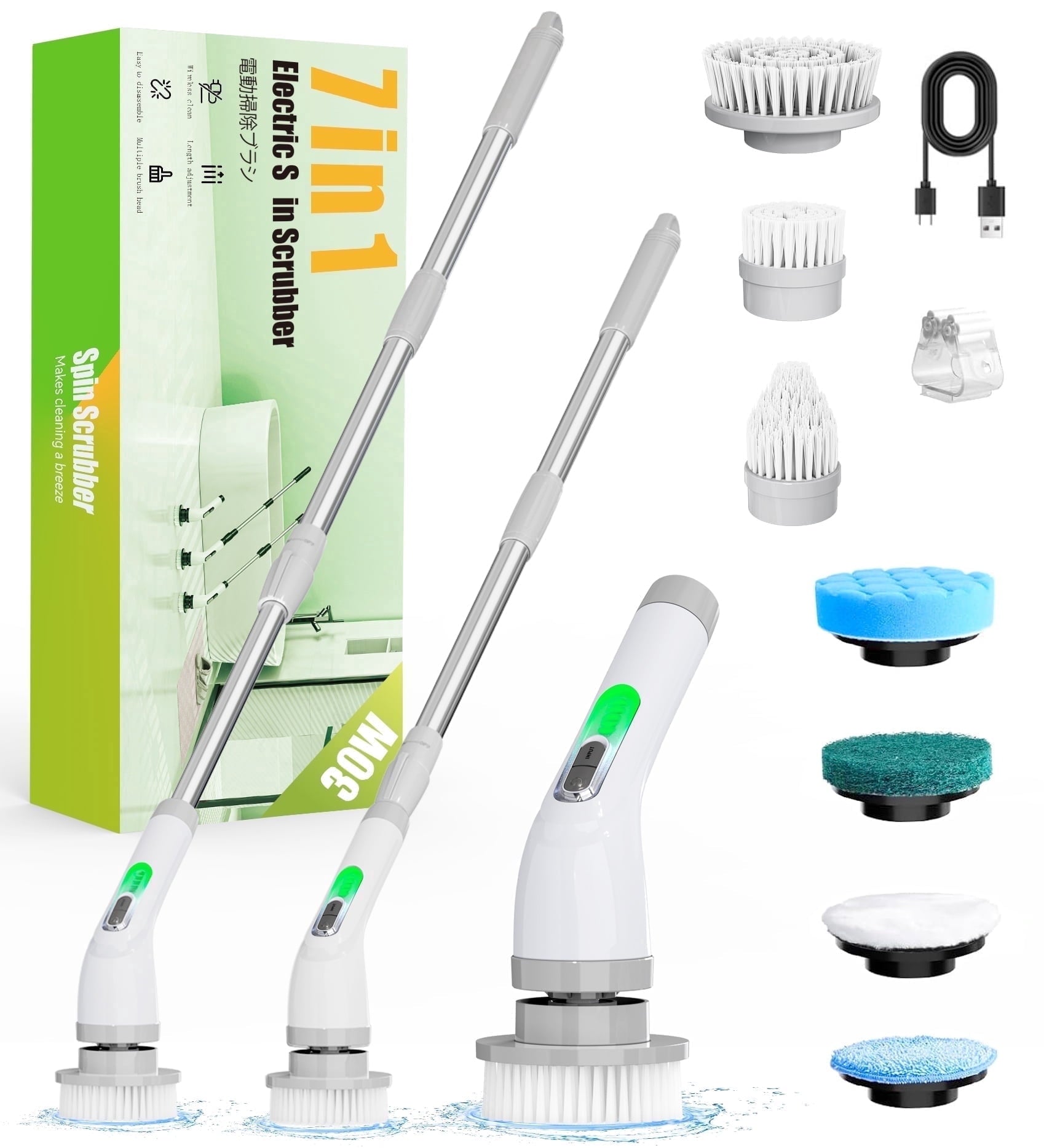
Most models share the same basic components:
- Cordless technology — a rechargeable, sealed battery so there's no cord to drag through water
- Rotating brush heads — interchangeable attachments that spin (or oscillate) to lift dirt and grime
- Rechargeable battery — typically lithium-ion, charged via USB or a dock
- Extension handle — an adjustable rod that lets you reach showerheads, ceilings, or floors without bending over
Because the body is sealed and waterproof, you can use it directly in a wet shower or while rinsing a sink, which is part of what makes it so much faster than a manual scrub brush or sponge.
Benefits of Using an Electric Spin Scrubber
A cordless power scrubber isn't just a novelty — it changes how long cleaning actually takes and how good the results look. The main advantages include:
- Faster cleaning — a job that takes 20 minutes by hand often takes 5 with a spin brush
- Less physical effort — the motor spins the brush, so you're guiding, not scrubbing
- Better cleaning results — consistent rotational speed lifts grime that hand scrubbing can miss
- Reaches difficult areas — the extension handle gets into corners, grout lines, and high or low spots
- Waterproof design — safe to use in the shower, around sinks, or outdoors
- Suitable for multiple surfaces — tile, glass, metal, plastic, and more, with the right brush head
- Saves time — ideal for weekly maintenance cleaning, not just deep cleans
- Reduces hand fatigue — a real benefit for anyone with arthritis or wrist strain
How to Use an Electric Spin Scrubber (Step-by-Step Guide)
Here's the full process, from unboxing to a finished, polished surface.
Step 1 – Fully Charge the Device
Before first use, give the scrubber a full charge. Most models take 3–5 hours to charge fully and run for 60–90 minutes per charge once broken in.
- Check the battery indicator light — it usually changes from red to green or blinking to solid when fully charged
- For the very first charge, many manufacturers recommend a full charge cycle (even if the light turns green early) to calibrate the battery
- Avoid leaving it plugged in for days at a time once it's full
Step 2 – Select the Correct Brush Head
Most electric spin scrubbers come with several interchangeable brush heads, and picking the right one matters as much as technique.
| Brush Head | Best Use Case |
|---|---|
| Flat Brush | Large flat areas — floors, countertops, walls |
| Corner Brush | Tight corners, grout lines, edges around fixtures |
| Dome Brush | Curved surfaces — sinks, tubs, wheel wells |
| Sponge Head | Delicate surfaces — glass, glossy tile, car panels |
| Scouring Pad | Heavy buildup — baked-on grease, hard water stains |
When in doubt, start with the softest brush that could plausibly do the job, then move to something stiffer only if needed.
Step 3 – Assemble the Handle
Attach the extension rod if your model has one. Most rods adjust in length so you can clean a shower ceiling standing up or scrub a floor without kneeling.
- Twist or click the rod into place until it locks
- Adjust to a length where your wrist stays relatively neutral, not bent
- Make sure the grip is dry before you start, especially if your hands are already wet
Step 4 – Apply Cleaning Solution
Spray your chosen cleaner directly onto the surface — not onto the spinning brush, which can fling solution around.
- Standard bathroom or kitchen cleaners work for most jobs
- Diluted white vinegar or a baking-soda paste are effective natural alternatives for soap scum and light grime
- Avoid harsh, abrasive chemicals on delicate surfaces like natural stone, painted finishes, or tinted glass, since they can dull or etch the surface over time
Step 5 – Turn On the Scrubber
Power on the device and select a speed setting if your model has more than one.
- Start on a lower speed for glass, plastic, or painted surfaces
- Use a higher speed for grout, tile, or outdoor surfaces with stubborn grime
- Apply gentle, even pressure — let the rotating brush do the work instead of pressing hard, which can stall the motor or cause uneven wear
Step 6 – Clean Different Surfaces
Technique varies a bit depending on what you're tackling.
- Bathroom tiles — flat brush, circular motions, focus extra time on grout lines
- Shower glass — sponge head, low speed, to avoid micro-scratches
- Bathtub — dome brush for curved sides, flat brush for the floor
- Sink — dome brush works well around drains and curved basins
- Kitchen backsplash — flat or corner brush depending on tile size
- Oven — use only manufacturer-approved attachments and oven-safe cleaners; many spin scrubbers aren't rated for high-heat interior surfaces
- Countertops — flat brush on a low-to-medium speed
- Floors — flat brush with the extension handle for standing cleaning
- Grout — corner brush, slow and steady passes
- Windows — sponge head only, to avoid streaks or scratches
- Outdoor furniture — scouring pad for textured plastic or metal
- Car wheels — dome or corner brush to get into the spokes
Step 7 – Rinse and Wipe
Once a section is scrubbed, rinse away the loosened dirt and cleaner residue.
- Use a damp cloth or direct water rinse, depending on the surface
- Dry surfaces like glass or stainless steel promptly to avoid water spots
- A final pass with a microfiber cloth gives a streak-free, polished finish
Step 8 – Clean the Brush Heads
A spin scrubber is only as good as its brushes, so don't skip this part.
- Rinse each brush head under running water immediately after use
- Let them air-dry fully before storing, ideally not in a sealed container
- Store brush heads separately from the motor body in a dry spot
Read More: Best Electric Spin Scrubber 2026
Common Mistakes to Avoid
Even a great tool underperforms if it's used incorrectly. Watch out for these:
- Pressing too hard — this strains the motor and doesn't actually clean faster
- Using the wrong brush — a scouring pad on glass is a fast way to scratch it
- Forgetting to charge — running the motor on low battery reduces spin power and effectiveness
- Using harsh chemicals — bleach-heavy or abrasive cleaners can damage both the surface and the brush bristles
- Skipping brush maintenance — dirty, grime-caked bristles spread residue instead of removing it
Read More: What Is an Electric Spin Scrubber and How Does It Work?
Best Cleaning Solutions to Use
Different problems call for different solutions:
- Soap scum — a vinegar-and-water mix or a dedicated bathroom cleaner
- Hard water stains — undiluted white vinegar left to sit for a few minutes before scrubbing
- Kitchen grease — a degreasing dish soap solution
- Tile grout — a baking-soda paste, scrubbed in with the corner brush
- Stainless steel — a mild soap solution, always wiped in the direction of the grain
- Glass — a diluted glass cleaner or vinegar solution, used on a low speed
A simple DIY all-purpose mix — equal parts water and white vinegar with a few drops of dish soap — handles most everyday jobs without harsh fumes.
Surfaces You Can Clean
An electric spin scrubber is versatile across the home and beyond:
- Bathrooms — tile, tubs, sinks, toilets (exterior), shower doors
- Kitchens — backsplash, countertops, stovetops
- Floors — tile, vinyl, sealed hardwood (on a gentle setting)
- Stone — marble and granite, but only with pH-neutral cleaner and a soft brush, since acidic cleaners can etch natural stone
- Glass — windows and shower doors, sponge head only
- Outdoor — patio furniture, grills (exterior only), vehicle wheels
Use extra caution with unsealed grout, antique fixtures, and any surface labeled "hand wash only," since the motorized action can be more aggressive than a manual sponge.
Maintenance Tips
A little upkeep goes a long way toward keeping your scrubber reliable:
- Battery care — avoid letting the battery fully drain repeatedly, since deep discharges shorten lithium-ion lifespan
- Charging practices — charge after each use or once the indicator shows low, rather than waiting until it's completely dead
- Brush replacement — swap brush heads every 2–3 months with regular use, or sooner if bristles look frayed or flattened
- Storage — keep the unit in a dry area, away from direct sun, which can degrade plastic housings over time
- Waterproof precautions — most models are splash- or shower-safe, but check the rating before fully submerging the body
Why a Cordless Electric Spin Scrubber Is Better Than Manual Scrubbing
| Factor | Manual Scrubbing | Electric Spin Scrubber |
|---|---|---|
| Cleaning speed | Slow, surface by surface | Significantly faster |
| Energy required | High — relies on arm strength | Low — motor does the work |
| Time savings | Minimal | Cuts cleaning time considerably |
| Cleaning quality | Inconsistent, depends on effort | Consistent rotational power |
| Ease of use | Tiring on joints and wrists | Comfortable, ergonomic handle |
| Accessibility | Hard for those with limited mobility | Easier for most users, including older adults |
For routine maintenance cleaning, the difference in time and effort is significant enough that many households stop reaching for a manual brush altogether.
A Practical Option for Everyday Cleaning
If you're shopping for one, the Electric Spin Scrubber Cordless Cleaning Brush is built around exactly the features that make this kind of tool worth owning: a cordless design for unrestricted movement around wet areas, multiple interchangeable brush heads for different surfaces, and an extension handle for reaching tubs, floors, and ceilings without strain. It covers the same surfaces outlined above — bathrooms, kitchens, tile, glass, and outdoor furniture — making it a practical, all-in-one option for everyday household cleaning.
Frequently Asked Questions
How do you use an electric spin scrubber?
Charge it fully, attach the right brush head for your surface, apply cleaning solution, then turn it on and guide it across the area with light, even pressure, letting the spinning brush do the scrubbing.
Can you use an electric spin scrubber on tile?
Yes. Tile is one of the most common uses — a flat brush head works well for large tile areas, while a corner brush handles grout lines.
Is an electric spin scrubber safe for glass?
Yes, as long as you use a soft sponge head on a low speed setting. Stiffer brushes or scouring pads can scratch glass surfaces.
What cleaning solution should I use?
A mild all-purpose cleaner or a vinegar-and-water mix works for most jobs. Avoid harsh, abrasive chemicals on delicate or natural stone surfaces.
Can it clean grout?
Yes. A corner brush head combined with a baking-soda paste is effective on grout lines and tight seams.
How long does the battery last?
Most models run for 60–90 minutes per full charge, though this varies by brand and usage intensity.
Is it waterproof?
Most electric spin scrubbers are designed to be splash- and shower-safe, but always check the specific waterproof rating before fully submerging the device.
Can I use it on kitchen surfaces?
Yes — countertops, backsplashes, sinks, and stovetops can all be cleaned, with brush selection depending on how delicate the surface is.
How often should brush heads be replaced?
Roughly every 2–3 months with regular use, or sooner if the bristles look frayed, flattened, or stop spinning cleanly.
Is a cordless spin scrubber worth buying?
For most households, yes — it cuts cleaning time significantly, reduces physical strain, and produces more consistent results than manual scrubbing.
Conclusion
Learning how to use an electric spin scrubber properly comes down to a few fundamentals: keep it charged, match the brush head to the surface, use the right cleaning solution, and let the motor do the heavy lifting instead of pressing down hard. Rinse and dry your brush heads after every use, and replace them every couple of months to keep performance consistent.
Done right, a cordless spin scrubber turns one of the most tedious chores in the house into a quick, almost effortless task — and the time savings add up fast once it becomes part of your regular routine. If you're ready to make the switch from manual scrubbing, the Electric Spin Scrubber Cordless Cleaning Brush is a reliable, versatile option built for everyday bathroom, kitchen, and floor cleaning.


